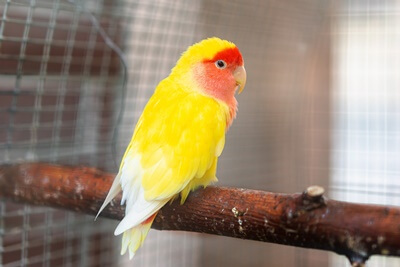
Lovebirds pair for life, which is how they acquired their name. When lovebirds reach sexual maturity after about 10 months, they seek a mate. If a pair of lovebirds court and mate, most remain together.
This means that lovebirds grow disconsolate when a bonded partner dies. The surviving lovebird will look for its lost mate and likely call out for them. Losing a lovebird doesn’t mean the other bird will die.
Take the survivor for a veterinary check-up to ensure the cause of death wasn’t a contagious disease. Also, monitor the remaining lovebird because it may be reluctant to eat or drink.
A grieving lovebird will take time for them to recover from its loss. Spend more time together.
Eventually, consider getting the surviving lovebird a new opposite-sex mate. A lovebird can form a lasting bond with a different compatible companion once it comes to terms with its grief.
Lovebirds Usually Mate for Life
Adopting a bonded pair of lovebirds, rather than a lone bird, is recommended.
While lovebirds may change partners if they’re incompatible or unable to breed, this seldom happens. Once a lovebird has found a mate, it’ll grow distressed if separated.

Consequences of A Lovebird’s Mate Dying
If a lovebird loses its bonded mate, the survivor will undergo a distinct behavioral change comparable to depression. It’ll likely lose its appetite and search for its mate near-constantly.
Bereaved lovebirds often become uncharacteristically quiet and unaffectionate.
After losing a mate, be patient and compassionate toward the survivor. It won’t understand the intricacies of grief, but it’ll eventually realize its partner is no longer around.
Monitor the remaining lovebird because it may lose its appetite. Spend more time with the lovebird so it’s not alone for too long, and provide what it needs to come to terms with its loss.
When the time is right, you can introduce a new mate. While lovebirds are monogamous, they can bond with a new mate after losing a partner. This is usually preferable to a lovebird living alone.
Both Lovebirds Won’t Die If One Dies
It’s a myth that a bonded lovebird will die from grief when its mate dies.
The average lifespan of lovebirds is 15 years. If a member of a bonded pair is young and healthy, it’ll recover from its grief. As the saying goes, time is a great healer, even for birds.
The exception is if a disease kills the lovebird. If one lovebird contracted psittacosis, parrot fever, or a similar disease, it may have been passed on to the other bird.
The body of the deceased lovebird should be assessed for signs of illness that could have led to its death. For example, Avian Pathology warns that lovebirds sometimes contract avian pox.
Also, ensure the surviving lovebird eats and drinks enough to meet its metabolic requirements.
What To Do If A Lovebird Dies
When a lovebird dies, a testing time is ahead for its mate.
After losing a bonded partner, it’ll likely act erratically and uncharacteristically. Expect it to be disoriented and confused for a while and to want more attention than usual.
It may become more vocal to request attention or become uncharacteristically aggressive. This is expected because the lovebird is adjusting to life without its companion.
Follow these steps to help a lovebird recover from its grief:
Offer Companionship
A bereaved lovebird will feel lost and confused without its companion. If it has formed a bond with you as an owner, it’ll look to you to fill the emptiness in its life.
In the immediate aftermath, spend as much time together as possible. The longer the lovebird spends alone, the more distressed it’ll grow.
Communicate and offer more petting if it’s willing to accept handling. While bereaved lovebirds can be emotionally volatile, they also crave companionship and interaction.
Time Outside The Cage
You may find that the surviving lovebird doesn’t want to spend time alone in its cage. This territory will remind it of what’s missing, so it’ll become distressed when caged for long periods.
Ensure the home is birdproof, and let it roam free in your company. You may find it wants to perch on your shoulder or rest on your hand, so allow this if it provides comfort.
For safety and security reasons, you should still put the lovebird in its cage when it gets dark. This means you shouldn’t let a pet parrot sleep in the same bed as you.
Distractions
When a lovebird loses its partner, it may go quiet. Distract it by leaving the television on whenever you exit the room. Provide more toys to keep it mentally and physically occupied.
According to Behavioral and Neural Biology, lovebirds are stimulated by mirrors in their cage because they believe the reflection to be another bird. Sadly, this can exacerbate the situation.
Introduce A Second Lovebird
Wait for the lovebird to recover from its grief before taking this step.
Introduce the two lovebirds from inside their cages, allowing them to grow accustomed to each other’s presence. Once they start singing to each other, let them free.
Check for signs of affection and bonding while they’re outside the cage.
Mutual feeding is at the heart of lovebird courtship. A male will attempt to court a female by regurgitating food. If the female is interested in mating, she’ll accept his offer.
This feeding will result in the pair of lovebirds spending their time together.
If possible, adopt a second bird of a similar age. Never break up an existing union or attempt to force a lovebird to bond with a new partner because not all birds are compatible.
It’s heartbreaking when one lovebird dies, but your duty of care to the surviving mate remains. Do what you can to ensure the second bird remains healthy, eventually introducing it to a new companion.