Newly hatched parrots explore the world with their beaks, called exploratory biting.
A parrot may nibble your fingers to tell you it’s hungry if they smell like food. It may even nibble your ears because it likes their dimensions or is attracted to the jewelry you’re wearing.
Nibbling can be a call for attention if you’ve missed subtler cues or can be a demonstration of affection. A parrot nibbling the lips could be an avian kiss because it has seen you do this with your loved ones.
While nibbling won’t harm anyone, training a parrot out of this habit while young is recommended. If a parrot thinks nibbling is desirable, it may become more forceful biting.
Difference Between Parrots Nibbling And Biting
Gentle nibbling and a parrot clamping its beak and biting hard are entirely different. Consequently, nibbling won’t break the skin and shouldn’t cause discomfort.
Bites can be painful and dangerous, especially from a larger parrot with a strong bite force.
Both nibbling and biting are conscious choices, but gentle nibbles will be more frequent. Parrots only bite forcefully when afraid or annoyed, although some bite due to overstimulation.
Parrots will usually warn that they’re planning to bite while nibbling will unfold organically. A parrot contemplating biting will hiss, pin its eyes, crouch, and lunge at you.

Body Parts Parrots Nibble
The fingers are the most common part of human anatomy that a parrot will nibble. The hands and fingers are the body parts the parrot sees and interacts with most.
Parrots frequently nibble the head and face. The ears stand out from the head, providing easy access, and parrots will be attracted to bright and prominent earrings.
A bird may also nibble your nose or lips. They’re soft and within easy reach of the beak.
Why Parrots Nibble Us
Here are some common reasons why parrots nibble humans:
Curiosity
Baby parrots are like human infants, exploring the world with their mouths. Young parrots will nibble on anything that captures their attention, including human skin. This carries through into adulthood.
Balance
Many parrots use their beak as an appendage, compensating for the absence of hands.
Wild parrots use their beaks to maintain their balance while climbing and may take the same approach when it comes to you. This is known as “beaking,” which is different from nibbling.
The parrot will place its beak over a body part and hold on until it feels secure.
It won’t bite down hard enough to cause pain or injury. However, it’ll apply more pressure than when nibbling. Beaking the fingers during training is common.
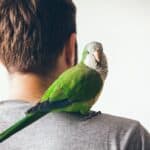
If a bird is perching on your shoulder, it may nibble the ears to determine how you react. If tolerated, a parrot will consider the ears part of the anatomy to use for leverage if it loses balance.
Hunger
Consider if a parrot is nibbling your fingers because it’s hungry, especially if you’ve recently been handling food. Parrots eat twice daily, but they like snacks between meals.
Nibbling is likelier if you attempt to handle the parrot first thing in the morning before it has eaten.
Wash your hands before handling a parrot to reduce the risk of confusing your fingers for food. If you’re hand-feeding a parrot, ensure it knows where the food ends and your fingers begin.
Seeking Attention
All parrots love attention from their owners, although some species crave interaction more than others. Most parrots let you know what they want through vocalizations and body language.
If a parrot believes you’re ignoring or misreading its cues, it may nibble you. Avoid setting a precedent where nibbling immediately sees the parrot getting what it wants.
Showing Affection
While this may sound cute, discourage nibbling of the lips. If the parrot switches from nibbling to biting, this action will become problematic and painful.
Nibbles on the lips can mean a parrot is attracted to you and considers you a mating partner. Many species of parrot lick beaks to share and regurgitate food, which is part of courting.
Parrots’ beaks host harmful pathogens and can pass on zoonotic diseases.

Allowing vs. Disallowing Nibbling from Parrots
If you allow a parrot to nibble you, it may eventually evolve into biting. Maintaining strict but fair boundaries ensures that tolerating nibbling isn’t mistaken for an invitation to bite.
Instill this training while the parrot is young. While a hatchling parrot’s nibbling may seem adorable, birds eventually begin puberty and enter the bluffing phase without notice.
When a parrot starts bluffing, it’ll become more aggressive and bite harder.
If you punish a parrot for biting, it won’t understand. In its mind, the parrot is behaving the same way it always has and won’t connect the increased bite force with your hostile reaction.
How To Stop A Parrot Nibbling
Start by ignoring the nibbling and not showing any reaction. This will dull the nibbling for an attention-seeking parrot, who will then seek other ways to get your attention.
If the parrot is nibbling your face, lips, or ears, move it away. Don’t immediately go to a time-out in the cage. Instead, give it time to realize that nibbling means a short cessation of interaction.
If the parrot immediately returns and nibbles again, you may need to put it in its cage. Close the cage for a minute, leave the room, and return to normal. Most parrots will soon make the connection.
Once a parrot has ceased nibbling, heed its body language. If a parrot believes it can communicate with you without this physical interaction, it’s less likely to return to its prior habits.