The most common mites affecting parrots are Dermanyssus gallinae (bird mites or red mites), Knemidokoptes pilae (scaly-face mites), and Sternostoma tracheacolum (air sac mites).
Parrot mites can be removed with natural remedies like baking soda or tea tree oil, which makes the feathers unhabitable for parasites.
Unfortunately, these safe and easy-to-use organic treatments will only remove and deter mites for a while, rarely permanently getting rid of or killing them.
To kill bird mites and their eggs, an antiparasitic spray that contains permethrin, an avian-safe insecticide, or treatment that utilizes the antiparasitic drug Ivermectin.
Keep the parrot’s living conditions sanitary by cleaning the cage and lining.
Causes of Mites
Keeping a pet leaves the home at risk of mites, and parrots are no exception. Owners must understand the warning signs of parasites, but how do parrots get mites?
Mites can find their way into a parrot’s cage in the following ways:
- Direct contact with another infested bird.
- Owners or other pets bring in mites attached to clothing or the skin.
- Nesting wild birds in a chimney or crevice.
- Crawling through open vents like air conditioning units.
Mites flourish in unclean conditions and multiply if you fail to clean the cage.
Mites That Live on Parrots
Three mites often attach themselves to parrots:
| Bird mites (Dermanyssus gallinae) | Bird mites don’t remain permanently attached to parrots. They’re nocturnal, hiding in dark corners during the day and reattaching themselves at night. |
| Scaly-Face Mites (Knemidokoptes pilae) | They’re attracted to parts of the head that aren’t covered by feathers, like the eyes, mouth, beak, feet, and legs. |
| Air sac mites (Sternostoma tracheacolum) | Air sac mites often attach themselves to small parrots, like budgerigars. They live in the trachea, which is a warm, moist location. Left untreated, air sac mites can block the air passage. |
None of the above mite species are harmless.
Signs A Parrot Has Mites
The symptoms of bird mites include:
- Itchy skin.
- Scabs and sores beneath the feathers.
- Bald patches.
- Restlessness and expressions of vocal distress, especially at night.
- Lethargy and muscular weakness.
- Low-quality egg production.
If a parrot has scaly-faced mites, it’ll display the following symptoms:
- Crustiness around the corner of the beak, often resembling a honeycomb.
- Refusal to eat as the beak becomes sensitive, leading to malnutrition or anorexia.
- Chalky white crust around the eyes and nares.
- Beak deformation and misalignment.
Air sac mites manifest as follows:
- Loss of voice, leading to reduced talking and singing.
- Coughing and sneezing.
- Wheezing and labored breathing with an open mouth.
- Clicking sounds when the parrot breathes.
- Discharge from the nares.
- Drooling.
If a parrot has mites, it requires prompt and effective treatment.
What Mites Look Like on Parrots
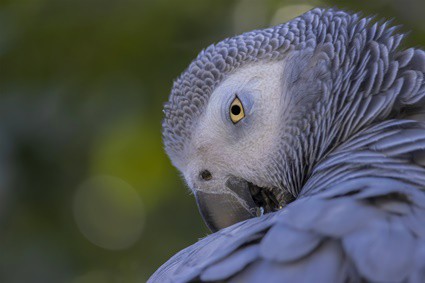
Seeing mites on parrots with the naked eye is nearly impossible. If a parrot exhibits mites symptoms, assume this is the case and take the necessary action.
Bird mites are easiest to detect due to their distinct red color. You’d need to look closely to observe mites early on, but they accumulate in large numbers.
Seeing air sac mites is impossible because they live in a parrot’s body. They can only be identified by taking a swab from the trachea and inspecting the sample under a microscope.
Scaly-face mites are equally hard to see because they burrow into the skin. Be mindful of a crusty appearance around the eyes and beak and behavioral changes, especially regarding eating habits.
Bird Mites Are Harmful to Parrots
Sometimes, leaving a mite infestation untreated for too long can be life-threatening.
The Journal of Veterinary Medical Science details an instance of a red-crowned parakeet infested with scaly-faced mites who died from mites, which led to stress, malnutrition, and anorexia.
Air sac mites enter the trachea and multiply in numbers, blocking the airways and making breathing difficult. A parrot will eventually perish if not successfully treated.
The concern is their numbers. Bird mites continually feed on a parrot’s blood until it’s left at risk of anemia. The Journal of American Science also stated that anemia weakens the immune system.
You Can Get Mites from Birds
Bird mites can attach themselves to any animal. If a parrot shares a home with a cat, dog, or small rodent pet, mites can sustain themselves on their blood.
Bird mites sometimes attach to human skin, potentially leading to an itchy rash. They won’t remain on human skin for long because human blood doesn’t sustain mites.
Air sac mites can also attach to humans but won’t impact the respiratory tract as severely as parrots.
They’ll soon die without an avian host, but if you handle a parrot while air sac mites live on your skin, you can transfer them and restart the infestation process.
Scaly-faced mites are unique to birds and won’t attach to humans or animals.
How To Treat Mites in Parrots
Removing mites from a parrot’s body is the first step in a larger process.
You’ll also need to purge the home of mites by sterilizing the cage, washing fabrics, cleaning vents that provide external access, and vacuuming regularly.
Natural Bird Mite Killers
Some owners prefer a natural approach to treating mites before utilizing medication or chemicals.
Here are some organic remedies for treating bird mites:
Vitamin A
All parrots need vitamin A for eye health and immunity. Vitamin A also builds a parrot’s resilience against parasites, especially scaly-faced mites.
Baking Soda
Run a parrot a bath in a kitchen or bathroom sink and add baking soda to the water. Continue adding baking soda until the water fizzes.
Bathe the parrot in this solution for 20 minutes, repeating this daily until all symptoms dissipate. You may also add vinegar, which is another mite killer.
Baking soda can also be sprinkled around the home to remove bird mites that have left the cage. Baking powder removes moisture from fabric, making the environment unsuitable for mites.
Tea Tree Oil
According to Cochrane Database System Reviews, tea tree oil is a popular remedy for humans who experience dermatitis due to skin mite infestation.
Diluted tea tree oil may perform the same role on the skin and feathers of parrots.
Mix 1 drop of tea tree oil with 2 tablespoons of olive oil to create a lotion before applying this to the parrot. Leave the solution for around 20 minutes, then rinse it off.
Garlic
Garlic is a natural mite deterrent, as they loathe the taste. Chop some fresh garlic cloves, mix them with 2 tablespoons of olive oil, and allow the solution to sit for 48 hours.
Add a tablespoon of vinegar, and apply the homemade lotion to the parrot’s body.
Leave it on for around 20 minutes before washing it off. Any mites attached to the parrot will flee when they come into contact with the garlic, although they may reattach later.
This solution carries more risk, as garlic contains allicin, a compound that can cause anemia.
Mite Spray for Parrots
Most avian pet stores sell sprays to kill and deter mites. Only purchase a spray for birds because the respiratory tract can be irreparably harmed.
Permethrin is the most effective ingredient in mite spray. It is a natural insecticide considered safe for use around birds. Conservation Physiology describes it as sub-lethal.
Drugs That Kill Mites on Parrots
The most popular antiparasitic drug is Ivermectin, which can be applied topically or orally. Proceedings of the Japan Academy refer to Ivermectin as a “wonder drug” due to its effectiveness in killing mites.
Add Ivermectin to the water or use it as a ‘spot on’ treatment applied through a pipette.
How Long It Takes To Get Rid of Bird Mites
Mites usually live 90 days, although most will die within 3 days if denied sustenance. Ivermectin is the fastest and most reliable way to eliminate parasites within 1 week.
A parrot must be quarantined and regularly treated until you’re confident all mites are gone internally and externally. You must also purge the home.
Don’t Wait for Bird Mites To Go Away on Their Own
Never take a wait-and-see approach because mites can cause severe harm to a parrot’s health. Mites multiply rapidly, so eliminate this threat at the first sign of symptoms.