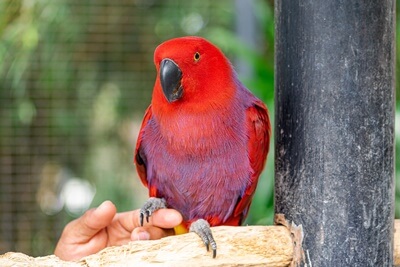
Male and female Eclectus parrots can learn up to 250 words and have clear, easy-to-understand speech. Their talking skills are complimented by their ability to memorize and sing short, melodic songs.
Training an Eclectus to speak is relatively easy because they enjoy learning new things. If you focus on teaching them 1-2 words at a time, they can develop an extensive vocabulary.
Age Eclectus Parrots Start Talking
It takes an average of 4-12 months before an Eclectus parrot begins to speak. You may not initially understand what they’re saying. Over time, enunciating words will come naturally.
Some Eclectus parrots don’t start speaking for 12+ months, while others never learn to talk. A bird taught to speak early in life is likelier to be successful, but old parrots can learn human words.

Eclectus Parrots Can Mimic Sounds
Parrots are receptive to household noises. Scientists believe this social interaction partially compensates for the stimulation they would have benefitted from in their natural environment.
Eclectus parrots can mimic environmental sounds, including:
- Musical instruments.
- Doorbells.
- Microwave ovens.
- Ringing phones.
- Human laughter.
- Animal sounds, like dogs barking.
- Dripping tap water.
According to the University of Alberta, parrots have a large medial spiriform nucleus, which relays information between the cortex and cerebellum.
This allows parrots to control their syrinx and replicate sounds they regularly hear.
How To Teach An Eclectus Parrot To Talk
Teaching an Eclectus parrot to talk isn’t difficult because they’re intelligent and cooperative birds. Follow these steps to teach a pet parrot to repeat human words:
Talk To The Parrot
The first step to getting an Eclectus parrot to talk is early exposure to human language.
Speak to the bird as often as possible, focusing on certain words. If you don’t talk to the parrot, it’ll only make bird vocalizations (whistles, squawks, etc.) and replicate household noises.
Tell other household members to speak to the bird and involve it in conversations. This will improve the parrot’s bond with the entire family, reducing the likelihood of getting a one-person bird.
Turn on the TV so the bird can familiarize itself with human words and voices. A parrot will likely have a favorite show. If an Eclectus enjoys watching TV, it’s more likely to learn fun words.
Avoid unsuitable vocabulary, like profanity, around talking parrots. If a word invokes a human response, whether positive or negative, it’s more likely to use it in the future.
Repetition And Context
Repetition is key when training a parrot, so it’s not enough to say things once or twice. Once you decide which words you want the parrot to learn, repeat them when you spend time together.
You can repeat a word multiple times during a training session, but using context can be more effective.
Instead of saying hello multiple times, say hello each time you walk into the parrot’s room. This way, it may associate the word with the action and greet you when you enter its space.
Easy Words
Start by teaching the parrot easy words, especially if it’s very young or old. Mature parrots have more practice with mimicry, so they’ll be able to learn more complex words sooner.
They should be words the parrot will hear regularly, such as everyday greetings or words of affection. Of course, you’ll likely want to start by teaching the parrot its name.
You can move to longer phrases and songs once the parrot becomes more skilled.
Same Tone
Eclectus parrots are intelligent. However, they don’t understand English, Spanish, Italian, or French. Wild parrots never use these languages because they’ve never been exposed to humans.
When parrots hear a word, they listen to what it sounds like without thinking about it unless they’ve learned its context. Using the same tone of voice will help the parrot remember specific words.
Use different intonations for other words and phrases. To make learning easier, you can extend vowels for certain words or use a sing-song voice for others.
Positive Reinforcement
When the parrot successfully says something, reward it so that it associates talking with positive outcomes. Eventually, the parrot will enjoy talking.
Positive reinforcement isn’t only limited to snack-based treats. Verbal praise and head rubs will also be well-received. Use a happy tone when praising the parrot so that it wants to further its skills.
Establish A Routine
Practice and consistency are crucial to learning, so establish a daily routine. Training sessions should be 5-10 minutes long and integrated into play sessions.
Avoid talking to a bird as you would a student since parrots are too impatient and restless. They’re like toddlers, who learn better through playtime-based activities than lectures.
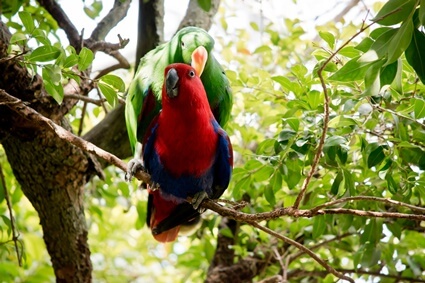
How Many Words Eclectus Parrots Can Learn
Most Eclectus parrots can learn up to 250 words. Of course, every parrot is different, even ones from the same family or species. Some Eclectus parrots won’t mimic this many words, even if they can.
Daily speech training over months or years is necessary to expand a parrot’s vocabulary.
Easy Words for Eclectus Parrots To Learn
The easiest words for Eclectus parrots to learn are the ones they hear often. Greetings, praise, and affection are the most common words you’ll hear an Eclectus parrot say.
Why Eclectus Parrots Stop Talking
When an Eclectus parrot stops talking suddenly, it usually means it’s ill or unhappy.
Parrots often speak less when they’re upset about something. If the parrot no longer talks, check for other signs of unhappiness, such as:
- Stereotypies (pacing, rocking, head bobbing, etc.)
- Uncharacteristic aggression.
- Lack of appetite.
- Less active than usual.
A pet parrot that can talk but has suddenly stopped may have a respiratory infection or an injury. Take the parrot to the vet for a check-up because parrots are good at hiding illness.