Rosellas’ colorful appearance, melodic singing, and character set them apart from other birds. If you want a medium-sized bird that isn’t overly clingy and demanding, a Rosella could be a good pet for you.
Rosellas are known for their strong personalities and feisty nature. As Rosellas are self-reliant and freedom-loving, you must be patient and understanding when taming them.
The most popular pet species are the Eastern Rosella (Golden Mantle) and the crimson Rosella. Some birds can live in captivity for up to 30 years with appropriate care and attention.
Rosella Parrot Appearance
The first thing you’ll notice about Rosellas (Platycerus) is their distinctive cheek patches. Rosellas combine bright yellow, crimson red, neon green, and deep purple.
This color combination serves as camouflage in the wild. According to Taylor and Francis Online, originating from the Australian bush, brightly colored Rosellas blend into their natural surroundings.
Rosellas have long, flat tails (Platycerus means “flat tail”). This makes them look regal and elegant when they walk around, almost resembling miniature peacocks.
Here are the different types of Rosella parrots:
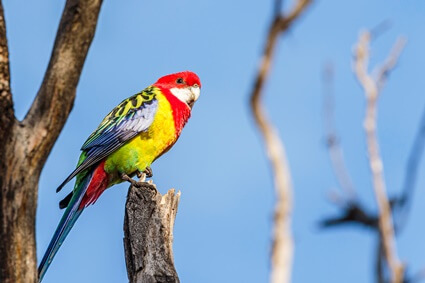
| Eastern Rosella: | A striking red head and breasts with bright white cheeks. The feathers are yellow, fading to green. |
| Western Rosella: | A bright red head and breast with yellow cheeks. The feathers are speckled blue and green. They’re the smallest of the Rosellas. |
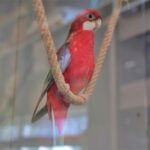
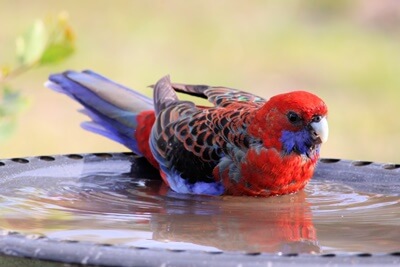
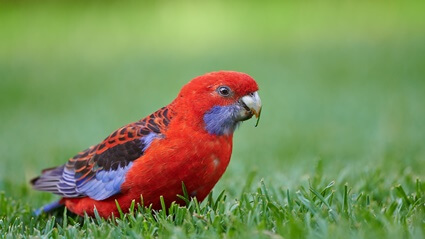
| Crimson Rosella: | Almost entirely red, with black and gray markings on the wings and cheeks. |
| Green Rosella: | A bright yellow head and breast with blue cheeks. The back wings are a mixture of black and green. They’re the largest of the Rosellas. |
| Pale-headed Rosella: | The head and upper breast are cream, while the remainder is blue. |
| Northern Rosella: | A black forehead, with white/blue cheeks. A pale, cream-colored breast with dark blue and black feathers on top. Their colors are more muted. |
Personality
Rosellas have strong personalities, tending to be strong-willed, bossy, and territorial.
Rosellas aren’t as affectionate as some parrots, but they’re not unfriendly. They need freedom and personal space, but they’re sociable birds that often enjoy interacting with humans.
Rosellas have a melodious singing voice and chirp and whistle when happy. Their beautiful colors and spiritful personalities make them uplifting company.
Rosellas can be nippy. However, they’re less likely to bite if you respect their boundaries. If a Rosella wants to be left alone, respect its wishes.
Size
Rosellas are medium-sized parrots, but their size is subspecies-dependent.
| Western Rosella: | 26 cm (10.2 inches) |
| Northern Rosella: | 28 cm (11 inches) |
| Pale-headed Rosella: | 30 cm (11.8 inches) |
| Eastern Rosella: | 30 cm (11.8 inches) |
| Crimson Rosella: | 36 cm (14.2 inches) |
| Green Rosella: | 37 cm (14.6 inches) |
Quiet vs. Noisy
Rosellas produce loud chatter, especially at sunrise and sunset (like all birds). They temporarily go quiet during mealtimes but are active communicators with other birds.
Wild Rosellas produce a high-pitched contact call to maintain contact with flock members. Interactions, especially during the breeding season, are usually noisy, aggressive, and persistent.
Talking Ability
Rosella parrots may learn to talk, but most prefer to vocalize by making bird sounds. According to Science Direct, Rosellas are among the least likely parrots to learn and use human vocabulary.
Rosella parrots may learn some words. Usually, they prefer whistling melodic songs. It’s inadvisable to get a pet Rosella with the expectation that they’ll learn to talk because it’s likely that they won’t.
Taming
Rosellas have a reputation for being untamable. Unfortunately, Rosellas become feral within 12 months. The taming process must commence early in life to maximize the chances of success.
The problem is that most Rosellas are bred to become aviary birds, not domesticated pets. All Rosellas have unique personalities, and some love to interact with humans.
Keep the following tips and advice in mind when taming a Rosella parrot:
- Don’t stare the parrot directly in the eyes, as this will likely be perceived as threatening.
- Don’t force interaction. Let the parrot observe you because it’ll show interest in all you do.
- Sit next to the cage and talk to the bird. That way, it’ll grow used to your voice and presence.
- If you think a Rosella might be ready to interact, approach slowly with a snack. Extend your hand so it can take the treat from you. Repeat this process over several days.
- Once your Rosella seems relaxed, extend your arm and invite it to step onto your hand.
A study by Nature found that Rosellas who play have more advanced cognitive abilities.
Lifespan
Rosellas can live for 20-30 years, reaching sexual maturity while they’re still young. Males mature sexually after 2 to 3 years, while females mature after 18 months.
Pet Rosellas live longer lives because their care needs are met, and there are no predators.
Breeding
Rosellas are attractive to breeders because they reproduce readily without complications. The average female will lay a clutch of 2-9 eggs once or twice annually.
Females reach sexuality maturity after about 18 months, while males mature after 2-3 years.
According to Research Gate, Rosella parrots prefer exclusive pair bonds, meaning they often remain with the same mate throughout their lifespan.
That said, 30% of wild Rosellas mated with a second partner when necessary, suggesting that Rosellas can adapt their mating behavior to ensure the species continues to thrive.
Compatibility with Other Parrots
When properly introduced to each other, a pair of Rosellas can be housed together. Of course, not all birds get along well. The situation has to be monitored, especially early on in the relationship.
If you’re breeding Rosellas, keep them in separate cages. Avoid putting breeding pairs in cages near each other due to the risk of aggressive behavior and ongoing stress.
Mixing Rosellas with Other Birds
Mixing different species should be avoided. According to Exotic Direct, mixing Rosellas with ringneck parrots can cause species to combine and become aggressive toward other birds.
How Much Rosellas Cost
You can buy a pet Rosella parrot for an average of $300-600. Younger birds in good health with vibrant colors and markings from dealers fetch the highest prices.
You may be able to save money by getting a Rosella from an animal sanctuary or buying a Rosella privately. Of course, you may not always be told if it has ongoing health or behavioral problems.
You must also consider the initial costs (cage, food/water bowls, toys, perches, etc.) and ongoing monthly expenses (food, supplements, cage liners, vet bills, etc.)
Rosellas Can Make Good Pets for Some
Rosellas have many qualities that make them desirable pet birds.
They have a rainbow of beautiful colors and are fascinating to watch. They’re also relatively self-sufficient compared to other parrot species, meaning you won’t have a clingy Rosella.
When Rosellas mature after 12 months, they can become nippy and aggressive. Training and socialization must occur while the bird is still young to tame a Rosella. Even friendly Rosellas bite a lot.
A Rosella isn’t recommended if you want a cuddly parrot that can learn to talk. Rosella parrots are usually bred to be aviary birds to be watched and admired.
Of course, there are exceptions to the rule. Some owners have established close bonds with Rosellas.