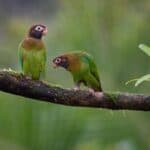
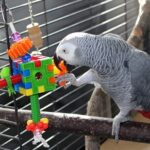
Parrots spend hours washing and preening their feathers. Unfortunately, they drop food and poop everywhere, so many new owners are shocked by how much mess parrots make.
Parrots are messy birds because they use their beaks and feet for everything. They lack precision when handling objects, food, and cleaning themselves.
Consequently, parrots destroy items, scatter food, and splash water everywhere. Large parrots, with less precise actions, are even more prone to messy eating.
While small parrots create less mess, they aren’t tidy. So, you’ll need to clean the cage at least once a week. During the molting season, you must tidy up stray feathers and parrot dust as required.
Why Parrots Are Messy Pets
Parrots are messy animals, and the problem is magnified when restricted to a cage. You may find seeds, feathers, poop, and toys scattered everywhere.
Naturally Untidy
As wild parrots live high up in trees, seeds, feathers, and poop fall away from their nests. Parrots are accustomed to having a large territory that extends for miles.
Also, parrots’ waste and dropped food benefit other animals and the ecosystem.
According to Ecology and Evolution, while parrots don’t defecate seeds capable of growing into plants, their biology still contributes to the environment.
Feathers, poop, and food can feed other creatures, fertilize the soil, and be used for nests.
Lack Precision
Parrots don’t have hands and fingers, so it’s difficult for them to pick up food and put it in their beak. Parrots rely on their beaks and feet to:
- Transfer food from foot to beak.
- Crack open unshelled nuts.
- Drink water.
- Preen feathers.
- Bathe themselves.
Due to the sizable gap between their mouths and feet, things inevitably get dropped. According to Watchbird, parrots display impressive precision with their beaks.
The process involves picking up, cracking, and eating food. There’s no need to waste time and energy putting leftover shells in a neat pile.
Bathing is also a messy process. According to Applied Animal Behaviour Science, parrots bathe less when exposed to sources like waterfalls, which can douse them more easily.
This practice isn’t possible in a cage with a water bowl. Instead, it demands that the parrot:
- Dips itself in water.
- Thrashes from side to side and ruffles its feathers to coat itself in water.
- Shakes to dry off.
Parrots may be agile and nimble, but they have limitations.
The more a parrot uses its left or right foot, the more skilled its actions will be. While most parrots favor one foot, juvenile parrots haven’t developed a preference yet.

Why Large Parrots Are Messier
Some parrot species are messier for the following reasons:
- Strength.
- Beak size.
- Waste production.
- Food consumption.
- Playfulness.
- Personality.
Bigger parrots, like macaws and cockatoos, are messier because they:
- Have a large beak, allowing more seeds to fall out.
- Eat more food, causing waste to accumulate sooner.
- Have more strength and can tear apart toys and cuttlebones.
- Produce more waste, so cages must be cleaned more often.
- Produce more dust and molt larger feathers.
Smaller parrots, like lovebirds and budgies, are slightly tidier.
Why Your Parrot Is So Messy
Aside from species, personality determines if a parrot is messy. Some birds are more carefree, scattering seeds around their cage. Some factors may cause a parrot to be messier:
- The cage is unclean. A parrot that’s stressed by its unhygienic environment will make more mess.
- Emotional distress. Parrots that are angry, depressed, or lonely may grow destructive.
- Sickness. Parrots with digestive issues may defecate more often.
- Scared. Parrots new to the home may eat more messily.
If a parrot is suddenly messier, check its mood and state of mind.
Messes Parrots Make
The most common sources of mess include:
Feathers
Parrots shed feathers, especially when molting. This process is where a parrot sheds its old, worn-out feathers to grow new ones. It happens 1-3 times yearly and continues for weeks.
During this time, parrots shed their feathers and produce dust. They aren’t picky about where it lands because this would usually be swept away by the wind or fall from the trees.
Feces
Parrots defecate everywhere. Worse still, parrot feces aren’t solid and have no discernible shape. Parrots’ waste is watery and will splatter. Then, it’ll dry quickly and stain if not cleaned up.
Food
Parrots are messy eaters due to their hooked beaks, so they may not easily pick up food.
- The shell casing will fall out of their mouths once cracked.
- Liquids will be released for juicy foods like strawberries.
- Parrots don’t have lips, so food may fall out when they swallow.
- Since parrots’ feet are thin and long, they regularly drop food.
These limitations can scatter food and water everywhere.
Cage
A parrot spends most of its time in its cage, so it’ll get dirty. This may include:
- Lost feathers.
- Regurgitated food.
- Dander.
- Thrown toys.
- Chipped pieces of cuttlebone.
- Splashed water.
Parrots can get sick from occupying an unclean cage, so cleaning the area is critical.
Clutter
Parrots like to destroy things. In the wild, this behavior is a way to:
- Find bugs and things to eat in trees.
- Sharpen or wear down their beaks on abrasive surfaces.
- Break apart hard or shelled food.
- Entertain themselves.
Parrots will keep themselves occupied by ripping up cardboard and stuffed animals.
How To Clean Parrot Mess
We grow accustomed to the smell of a home with a pet bird. We must establish a cleaning routine.
Food
Seeds get scattered in and around the cage. Once there, a single flap of the wings sends them under a couch or behind a drawer. They can turn moldy if not removed. You must do the following:
- Pick up any leftover and dropped foods.
- Remove spilled water or excess moisture.
- Clean the parrot’s beak and face.
- Change the cage lining.
- Wash toys, perches, bells, ladders, etc.
- Vacuum or sweep up debris.
If a parrot has a cuttlebone and the leftover dust is getting everywhere, consider grinding it up and mixing it with food. Only do this if the parrot has an alternative way to wear down its beak.

Poop
Feces contain bacterial microbes that can make you and the parrot sick. Since most people keep their parrots in cages, that’s where they release their waste. You must do the following:
- Place newspaper (or a liner) on the bottom of the cage.
- Replace it weekly or sooner if it becomes overly dirty.
How Often A Parrot’s Cage You Be Cleaned
A cage must be deep-cleaned weekly. In addition, you should:
- Clean the cage with a mixture of white vinegar and water.
- Let it dry out in the hot sun to kill mold and fungi.
The risks of not cleaning the cage weekly are elevated because you’ll miss the following:
- Specific details about the cage’s condition, like rust, damaged bars, and broken perches.
- Signs of mold/fungal growth that cause skin conditions like ringworm.
- When mold dries, it releases spores that a parrot breathes in, leading to aspergillosis.
Parrots make a mess due to the design of their feet and claws. While this is advantageous in the wild, it’s a problem in the home. Consequently, you must clean up regularly if you have a parrot.