Parrot poop should be green or brown with specs/streaks of white and accompanied by colorless urine. This suggests it’s digesting food properly and is likely free from obvious health concerns.
If the droppings are red, black, pea-green, or yellow (mustard), it could be due to sickness, dehydration, or an internal injury. For example, lime-colored poop is a sign of liver disease due to Chlamydiosis.
If the parrot’s feces are excessively watery (mushy), it could have diarrhea or polyuria. If the poop is dry (coarse-textured), it could be dehydrated, constipated, impacted, or have a digestive disorder.
Parrots poop regularly due to their fast-paced metabolism. The species, age, and diet determine how often they produce waste. Note any sudden changes in pooping frequency or signs of straining.
Healthy Parrot Poop Color
The color of a parrot’s feces is primarily determined by its diet:
- If a parrot is mostly fed a pellet-based diet, it’ll have brown feces.
- If it mostly eats seeds or vegetables, its poop will likely be green.
- Parrots can have pink-colored feces if they eat fruits/berries and vegetables.
There are three different components of parrot poop:
- Green: Feces.
- White: Urates from the kidneys.
- Liquid: Colorless urine.
The green and white portions should be equal, with enough urine to form a wet ring.
What Parrot Waste Looks Like
Healthy parrot poop should be:
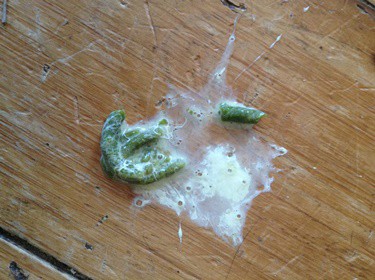
- An even green color. This may be lighter or darker, ranging from grass-green to olive-green.
- It’s surrounded by liquid. A parrot pees and poops together, leading to a watery consistency.
- Tube-like in shape. The poop will be short and tubular.
- Firm in texture. The poop looks firm and well-packed.
- Urine should be clear: Accounts for 30-50% of the waste.
- Urates should be white/chalky. Other colors may indicate problems.
Abnormal Parrot Droppings
Abnormal parrot poop will have one or more of the following characteristics:
- Light color.
- Mustard yellow.
- Rusty-brown or bloody.
- Larger than normal.
- Coarse texture.
- Watery and mushy.
- Contains undigested food.
- Unpleasant smell.
- Urine is colorless.
- Dead worms in its poop.
Red Poop
A parrot’s droppings may:
- Contain streaks of red.
- Be tinted with red.
- Be surrounded by red liquid.
If a parrot has recently eaten red food, its droppings could reflect this color. For example, beetroot (due to a compound called betanin) leads to pinkish-red feces.
Red can signify internal bleeding, most likely due to melena. Dried blood will be tar-like or black.
Pooping Blood
If the red (or black) in a parrot’s poop is blood, the bleeding may be due to:
- Bleeding in the upper intestinal tract.
- A tear near the anus.
- Tumors.
- Bacterial infection.
If so, the droppings will contain streaks of red, the urine will be slightly red, and there may be flecks of black. The parrot may be unable to pass healthy feces or have bloody diarrhea.
The blood may be due to an unhealed tear around the anus or internal bleeding.
Brown Poop
If the poop is rusty-brown, tar-like, or black, this suggests the parrot may be bleeding internally. An injury will likely be within the upper digestive tract.
Blackish or brown poop can mean the parrot’s healthy droppings have been left unattended for too long. Poop will naturally darken as it dries due to oxidization.
A parrot with darker green droppings could make an owner believe it’s dried blood. It has likely sat too long if its next droppings are an even green.
Light Green Poop
While green poop is healthy, it should be dark green. If the poop is very light-colored, even pea-green, this could indicate liver damage. This is due to psittacosis from the bacteria chlamydia psittaci.
Yellow Poop
Yellow and watery parrot droppings mean that there is extra urine. The urine will be grayish, which indicates chlamydophila psittaci (pneumonia). It can also signify that a parrot isn’t eating.
Lumpy Poop
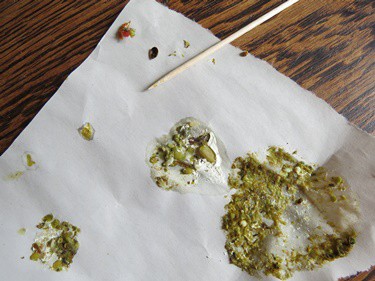
It may be undigested food if the droppings are thick, lumpy, or unevenly textured. In some cases, you can identify the pieces of food, which could be due to:
- Digestive issues (not digesting food properly).
- Proventricular dilatation disease (PDD).
- Giardia (a parasite that causes diarrhea.)
Poop Size
The size of poop depends is species-specific, so check for sudden deviations from the norm.
If a parrot passes large droppings, it may be due to something it can’t digest. If the droppings are too small, the parrot may have constipation, impaction, or another digestive issue.
Less Poop Than Normal
If a parrot is pooping less than usual, this could mean that it’s:
- No longer eating.
- Eating food with a lower fiber content.
- Constipated.
- Impacted.
Pooping A Lot
If a parrot is pooping more than average, it could have:
- Pancreatic disease.
- Diabetes mellitus.
- Kidney disease.
It largely depends on what the parrot is producing when it poops. You can also tell by the ratio of the poop’s components – whether it’s producing more feces, urine, or urates.
Stopped Pooping
If a parrot isn’t pooping or has difficulty pooping, it may have constipation, a blockage due to an egg (dystocia), or something obstructing the gastrointestinal tract.
Watery Poop
Healthy poop has the consistency of toothpaste. It’ll be firm enough to keep its form but not so stiff that it remains intact when pressed.
If there’s more urine than usual, it may have drunk too much or have a bacterial infection.
Dry Poop
If a parrot’s poop is hard and dry, it’ll be difficult to pass, so you’ll likely observe straining. The parrot could be dehydrated or have kidney problems if the feces are overly dry.
Loose Poop
A parrot’s poop may lack firmness if it’s eaten moisture-rich food, such as watermelon.
Watery poop isn’t a medical problem if it reflects a recent dietary change. Stools will naturally be firmer when the parrot has eaten seeds, nuts, or fiber-dense foods. Some simple modifications will suffice.
The parrot has diarrhea if the droppings are consistently loose and watery. Sometimes, diarrhea is mistaken for polyuria. The difference is that polyuria results in more liquid around the feces.
Smelly Poop
Healthy parrot droppings should have no odor. If the cage isn’t cleaned for a long time, the area will have a dry, musty smell. More than anything, this is an unhealthy environment.
The waste will dry up and release fungal spores that can cause respiratory diseases like Aspergillosis.
Abnormal Urine or Urates in Parrot Waste
The color of urine and urates matter as much as the poop itself. Here are the meanings:
- Green or yellow urine: Liver disease.
- Red urine: Internal bleeding in the lower part of the digestive tract.
- Green or yellow urates: Liver disease or anorexia.
- Brown urates: Lead poisoning or dried blood.
- Red urates: Kidney disease or internal bleeding.
No Urates In Poop
If parrot poop contains no urates, this implies a possible kidney problem.
Ignoring Abnormal Parrot Poop
Not all warning signs are cause for concern because parrots get mild stomach issues that pass. Also, dietary modifications can cause changes in feces. Consider the following factors:
- Has the parrot stopped eating?
- Is the parrot sitting at the bottom of its cage?
- Is the parrot breathing with its mouth open or wheezing?
- Does the parrot have less energy than usual?
- Is the parrot losing or gaining weight?
- Is the parrot vocalizing more or less than expected?
- Has the parrot’s temperament changed?
The color, consistency, and frequency of parrot poop matter most when they deviate from the norm. If you notice a sudden change that a dietary change can’t explain, seek a health checkup from a vet.