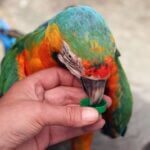
Parrots can become constipated due to an inappropriate diet (low in fiber), dehydration (not drinking enough water), a lack of exercise, cloacoliths, or gastroenteritis due to poor husbandry.
Constipation is uncommon in birds. The signs a parrot is constipated include lethargy, straining to defecate, irritability, fluffed-up feathers, hard and sticky droppings, and dry mucus membranes.
Constipation can be confused with egg binding (when females strain to release fertilized and unfertilized eggs). Both conditions are life-threatening, so contact a vet if you observe a parrot straining.
How Many Times Parrots Poop a Day
According to Wiley, birds have an entirely different digestive system from humans. This means parrots poop many more times per day than us.
It’s normal for a large parrot like a macaw to poop 10-20 times per day, whereas a small bird like a budgie can poop 40+ times per day.
There’s a medical concern if a parrot has stopped pooping. In other words, there’s no waste in the cage.
Why Your Parrot Isn’t Pooping
If a parrot isn’t going to the toilet, the explanation could be constipation. While constipation is uncommon in birds, it’s certainly possible. What causes constipation in parrots?
The main reason for constipation is a diet low in fiber. If you haven’t fed the parrot enough fruits or vegetables, it won’t have enough fiber in its digestive system.
Parrots need soluble and insoluble fiber to add bulk to their stools. The stool will absorb water, which aids digestive transit. That’s why dehydration can also stop a parrot from pooping.
Another cause of constipation is cloacoliths. These comprise hardened uric acid and can obstruct the rectal opening, making it difficult and painful for a parrot to poop.
According to ABVP, excess water consumption can be due to traumatic neuropathy, brooding behavior, etc. Although poorly understood, cloacoliths are most prevalent in macaws and Amazon parrots.
If a parrot isn’t getting enough exercise, this increases the likelihood of constipation.
Also, parrot constipation could be secondary to gastroenteritis due to a dirty cage or bacteria in food.

How To Tell If A Parrot Is Constipated
Since constipation is rare in parrots, owners aren’t usually conditioned to be vigilant.
An obvious sign that something is amiss is if a parrot is pooping less frequently than usual. That said, a reduction in pooping frequency can have other explanations.
If the weather is cold, you’ve been playing with the parrot less, or the bird has recently matured, you should expect it to poop less frequently.
Parrots poop more when they’re excited. If they’re engaged in fewer activities (or have recently matured), they’ll be less excited and poop less. That said, all parrots should poop occasionally.
Consult a vet if you observe the following warning signs of constipation in pet parrots:
Straining to Defecate
If a parrot strains to defecate, this signifies constipation. You’ll instantly realize a parrot is straining if it takes much longer to poop than usual, yet nothing or little emerges from the vent.
Parrots sometimes wag their tails when straining and may whimper when attempting to defecate.
A parrot may constantly try to poop to relieve its discomfort. Although a constipated parrot produces less poop, it’ll spend more time trying to pass waste than usual.
Irritable
A constipated parrot won’t want to be petted, especially on the back. It’ll avoid interaction.
If a parrot is nipping more than usual, this intolerance could be due to constipation. A constipated parrot won’t want to lark around because it’ll feel unhappy and preoccupied with its issue.
Lethargy
You can ascertain if a parrot is lethargic by determining if it experiences joy from activities it once enjoyed (e.g., seeing its mate, playing, talking, performing tricks, and eating.)
It’s normal for parrots to need some quiet, and wanting alone time isn’t necessarily a sign of lethargy. Some species, like Rosellas, spend more time alone. Much depends on what’s normal for the bird.
If a parrot is unusually lethargic and reserved, this could be a sign of constipation or illness.
Fluffed-up feathers
Fluffed-up feathers suggest that the temperature is too high. An overheated parrot may become dehydrated, which can cause constipation.
Regurgitation
Regurgitation happens in the latter stages of constipation. However, it’s also a mating behavior practiced by male parrots. Males regurgitate food for females, often when incubating their eggs.
How can you tell if regurgitation is a sign of constipation? If a parrot displays natural mating behavior, it’ll only regurgitate food in front of its mate or favorite person.
You should be concerned about constipation if a bird’s regurgitating in private for no reason.
Refusing Food
Another sign of constipation is food refusal. If a parrot can’t go to the toilet, it’ll be disinterested in food. Many illnesses have inappetence as a symptom, and they’re all life-threatening.
Parrots, especially smaller species, rarely survive for more than 24-72 hours without food.
Dirty Vent
If a parrot has constipation, it may have a dirty vent. You may notice poop stuck to the vent or dirty hind feathers. Wipe the parrot’s vent with a clean, damp cloth to reduce the risk of bacterial infection.
Sticky Droppings
A constipated parrot may still eliminate, but there could be changes to the poop’s consistency.
Extremely dry poop shows that a parrot is dehydrated, while small and sticky droppings can be a symptom of gastroenteritis.
According to the MSD Manual, sticky and green droppings indicate Psittacine herpesvirus (PsHV-1). This can cause Pacheco’s disease and mucosal papilloma disease.
Vocalization
According to Bio-One, unhappy vocalizations while straining can signify cloacolith. These are obstructions that can prevent a parrot from passing waste.
Cloacoliths are often formed from uric acid. Once the condition is identified and treated, most parrots return to producing regular bowel movements shortly afterward.
Dehydration
Dry mucus membranes are a sign of parrot dehydration, which can lead to constipation.
Other signs of dehydration include sunken eyes, tenting skin, panting, and spending time on the cage floor. Parrots rarely survive more than 24-72 hours without water.

Things Mistaken for Constipation in Birds
A medical concern that resembles constipation in parrots is egg binding (dystocia).
Egg binding occurs when a female can’t release her clutch of eggs. A calcium deficiency, old age, too-large eggs, and a lack of sunlight often cause dystocia.
The signs of egg binding include:
- Straining, yet nothing emerges.
- Distended stomach.
- Sleeping more than usual.
- Leg paralysis (one or both legs).
- Puffed-up feathers.
- Tail bobbing.
- Not using perches.
If a parrot is male, it can’t become egg-bound because only females have ovaries.
Why Parrots Can Die from Constipation
Parrots defecate and lay eggs through the vent. A parrot must poop regularly to remain healthy because a prolonged blockage can lead to premature death.
If a parrot has dystocia, it’ll need medical intervention to lay. Don’t wait for the condition to clear up.
What To Do If A Parrot Is Constipated
You can do things for a parrot while awaiting a vet appointment. These include:
- Wipe the parrot’s rear end with a damp cloth if poop has built up.
- Provide clean water in an accessible location.
- Provide fiber and moisture-rich fresh fruit and vegetables.
- Apply a few drops of vegetable oil with a dropper to the cloaca.
More dietary fiber can prevent constipation. About 15-20% of a parrot’s diet should comprise fruits and vegetables. If a parrot is constipated, temporarily reduce the number of pellets.