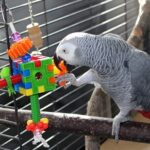
As pet parrots spend most of their time caged, they need fun things to do. Putting a swing in a birdcage, alongside other toys, promotes an active, healthy, and enriching lifestyle.
Increased activity assists with weight control and cardiovascular health. The parrot will develop stronger feet, toes, ankles, and knees, reducing the risk of arthritis and other joint conditions as it ages.
Bird-safe swing materials include rope, wood, and plastic. Wood is preferred because it’s 100% natural and helps wear down the parrot’s ever-growing beak and claws.
Ensure the swing is securely attached to the cage roof. Position it so the parrot won’t bump into obstacles when swinging back and forth like a pendulum, and regularly check for wear to the cords.
Why Parrots Need Swings
Swings relieve boredom and prevent behavioral problems like feather-destructive behavior (FDB). Some parrots like their swings so much that they sleep on them in preference to their perches.
A swing allows parrots to access higher vantage points by leaping from a swing to a perch. Playful and agile parrots may use their swings to learn gymnastic-like tricks and feats to entertain us.
Swings enrich the lives of parrots, as the swaying motion resembles the motion of a tree branch. In addition to simulating flight, swings help parrots exercise and develop their muscles.
A swing is essential if a parrot has never learned to fly or can’t take to the air due to clipped wings. Swinging back and forth helps improve a parrot’s balance and coordination.
Smaller psittacine birds, like budgies, lovebirds, and parrotlets, most enjoy swings. Large parrots, like macaws and cockatoos, may enjoy swings, but additional safety measures must be introduced.
Different Types of Swings for Parrots
A simple swing involves hanging a perch by two cords from the top of a cage. This enables birds to build momentum and swing back and forth. Small parrots will have hours of fun.
A cave swing provides a parrot with a hiding place while swinging in a plush hammock or bed. It’s ideal for cages with several parrots, as they can get some alone time.
An oversized ring can be used as a swing to entertain a curious parrot. It’ll enjoy perching on the swing and can learn fun tricks, such as flying through the ring.
What Parrot Swings Are Made From
Swings are constructed from wood, rope, and plastic, each offering pros and cons.
Wood
Wooden swings are durable, appealing to the parrot’s core instincts. Only use non-toxic wood because the parrot chews its wooden swing to wear down its beak.
Palm wood is recommended because it’s light enough to propel the parrot through the air. This material is strong and can resist ongoing attention from the beak.
Other types of bird-safe wood for swings include:
- Dogwood.
- Magnolia.
- Elm.
- Ash.
- Cholla.
- Willow.
- Birch.
- Apple wood.
- Aspen.
Ensure the wood hasn’t been treated with chemicals.
Plastic
Plastic or PVC swings appeal to parrots because they’re brightly colored.
Be mindful of damage to plastic. If a parrot chews on its swing, it may ingest small, indigestible pieces of plastic. Unfortunately, ingesting brittle plastic can lead to intestinal blockages or impaction.
Rope
Natural rope swings, like sisal and hemp, are tough and durable. They must be tightly wound and bound together. Rope swings are easy to grip, and the uneven texture exercises the feet.
The rope will erode because the parrot will chew the material. Fraying can lead to entangled legs and necks and can cause choking. Check the integrity of the material to ensure it’s safe.
A rope swing can be hard to clean when a parrot defecates or gets runny food on the swing.

Swing Safety for Parrots
Here are the safety precautions to take before adding a swing to the cage:
- The swing must be of an appropriate size for the parrot.
- Check that it’s firmly secured to the top of a cage. Review these fixtures regularly, tightening them if the swing becomes loose.
- Monitor the parrot during its first play session, ensuring no signs of entanglement.
- If a parrot chews the rope, replace them if they become frayed or damaged.
- Check wooden and plastic swings for sharp edges or protruding components.
- Never use cotton or yarn to hang a swing. A parrot will likely chew these materials, causing the swing to weaken. Also, these materials can’t be digested if swallowed.
Consider laying soft bedding or a cushion on the floor of your cage. However, it’ll get coated in poop.
Parrot Swings with Toys Attached
Adding toys is optional, but many owners find their parrots engage more with swings with additional features. Parrots can’t resist exploring toys that stimulate their senses.
Bells are an ever-popular addition to simple swings. The motion caused by swinging will cause the bells to ring, captivating the bird.
This swing may be noisy, especially if the parrot imitates the chimes of the bells. However, it’ll be fun.
Many owners decorate swings with wooden blocks and beads, using vibrant color combinations to attract the parrot’s curiosity. Avoid red because it’s a universal color of danger in the wild.
Features of Swings for Birdcages
The best swings for parrots have the following features:
- Ability to swing and gain momentum without much effort.
- A stand of a different size encourages the parrot to exercise its legs and feet.
- Enough color to attract and maintain the parrot’s interest.
- Thick, sturdy ropes paced far apart enough to avoid entanglement.
- Sufficient size and weight-bearing capacity to support the parrot.
Where To Put A Swing in A Birdcage
A bird swing should be securely attached to the cage roof, ideally near the center.
A swing should be positioned so it can move back and forth freely. Cage bars, perches, toys, decorations, water bottles, or food dishes shouldn’t inhibit the range of motion.
The Parrot Won’t Use Its Swing
If a swing unexpectedly appears in the cage, the parrot may grow suspicious and fearful.
While most parrots like swings in their cages, they have personal preferences. Give the parrot time to adjust to the swing. Parrots are neophobic, fearing anything new or unfamiliar.
Involve the swing in interactive play with the parrot. Encourage it to fetch items tossed through a ring swing or push the parrot if it gets onto a simple swing.
Show interest and give praise as the parrot plays so it realizes the swing is pleasurable.
It’s not a problem if a parrot likes or dislikes swings, as there are other ways to entertain parrots. That said, swings are among the best ways for parrots to exercise and enjoy life.