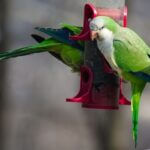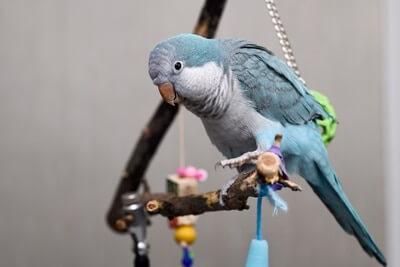
Quaker parrots, known as Quaker parakeets, monk parrots, and monk parakeets, are naturally happy birds with friendly, loving, and fun-loving personalities.
Although Quakers are usually cheerful, they can experience unhappiness. If so, their behavior, desire to be social, and aggression level will change markedly.
Quaker Parrot Happiness Level
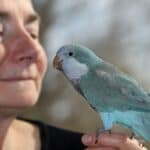
Quaker parrots bond closely with their owners because they like to give and receive affection. They enjoy being talked to, given attention, petted, and involved in daily activities.
Although they’re naturally happy when cared for properly, Quakers can go through times of unhappiness, experiencing stress, anxiety, and low mood.
Quakers can also grow sick. If their illness is just something simple like an upset stomach due to overeating dairy (lactose intolerance), they’ll return to normal within a few days.
Signs of Unhappiness or Illness
When Quakers become unhappy or sick, their behaviors may change. If you notice anything unusual, it’s vital to learn why they suddenly feel low.
Some behaviors indicate there’s something amiss with a Quaker. Other signs, like sudden pacing, head swinging, or toe-tapping, have more subtle causes.

Feather Plucking
According to Veterinary Clinics of North America Exotic Animal Practice, feather plucking, also called feather-destructive behavior (FDB), happens exclusively to captive birds.
That said, Quakers remove worn-out feathers while preening themselves. It becomes an issue when they obsessively start feather plucking because it leaves bald, featherless areas.
Parrots pluck their feathers for reasons such as:
- Boredom.
- Overstimulation.
- Loneliness.
- Lack of attention.
- Health problems.
Once Quaker parrots start removing feathers to self-soothe or occupy their time, it can be hard to get them to stop. Sometimes, the behavior progresses to self-mutilation, harming the skin and bones.
Plucked feathers grow back unless the feather follicle is irreparably harmed, meaning most birds won’t have permanent bald spots. Of course, recovery depends on finding and resolving the trigger.
Biting
If a Quaker isn’t usually a biter but suddenly starts biting, it could mean it’s sick or unhappy.
Biting is usually a sign of stress or fear. If they feel threatened, they may bite as a defensive response. However, biting may suggest a bad mood due to discomfort.
Increased or Decreased Vocalizations
Quakers are usually talkative, making noises to communicate or let you know they’re happy.
Sometimes, when a Quaker parrot has a negative experience, it can become much louder to the point of screaming or quieter, saying little. It’s the deviance from the norm that’s significant.
Quaker Parrot Body Language
Learning more about the body language of Quakers enables you to understand how it feels.
Body Language Meanings
Quaker parrots display body language that tells you when they’re thriving. They’ll also show specific body language that alerts you when they’re unhappy, angry, or scared.
Sometimes, body language has more than one meaning. To decipher the double meaning of body language, you must look for other signs that a Quaker parrot is feeling good.
Here are some happy body language in Quaker parrots:
Beak Clicking
Quakers often click their beaks when pleased to see you because it’s their way of greeting a much-loved owner upon entering the room, especially if they’ve been away for most of the day.
They may also click their beaks when they feel good about what’s happening around them. Beak clicking can occur when they’re warning someone to stay away.
Wiggling Tongue
When you see a Quaker parrot wiggling its tongue, it’s usually happy or wants attention.
Ruffling Feathers
Quakers often ruffle their feathers when preening themselves, wet and trying to dry off, or cleaning off dust and dirt. They may also ruffle their feathers when resting or relaxing.
Shaking and Quivering
Shaking and quivering are everyday body language. A Quaker parrot may shake or quiver because it’s contented, scared, or nervous. It may also be cleaning its feathers before shaking them to dry off.
Shaking can imply illness, or it could mean that a parrot feels cold and is shivering to get warm.
This body language must be interpreted with other behaviors to determine the true meaning.
Head Bobbing or Swaying
Quakers often bob or sway their heads when excited or want attention.
They sometimes bob their heads when asking you to feed them. Baby Quaker parrots often bob and sway their heads at their parents to get attention when hungry.
Wagging Tail
Sometimes, Quakers wag their tails when excited or as a greeting when they see you. Usually, Quakers wag their tails when they feel upbeat.

Quaker Parrot Happy Sounds
According to Current Biology, Quakers have “highly expanded brains and highly developed cognitive and vocal communication skills.” These qualities allow them to mimic human speech and sounds.
ABC Science stated that Quakers use their tongues to form sounds and words like humans. They make sounds to converse with you or let you know how they feel.
Quaker parrots vocalize when happy, but some sounds are unique to each parrot, which makes it hard to provide a comprehensive list of happy sounds they produce.
When Quakers are happy, they whistle and chatter while making familiar sounds and saying words they’ve learned to mimic.
Quaker parrots can make laughing sounds, which are entirely mimicked noises. When it hears you laugh, it may start making this sound.
Sometimes, Quakers laugh inappropriately, such as when you’ve banged a knee on the table.
Quaker parrots can recognize how your voice sounds before you start laughing, so they’ll often start laughing as soon as you do.
It can be fun when a joke is told, and a Quaker parrot laughs just as you deliver the punchline.
How To Make A Quaker Parrot Happy
Quakers are social birds that thrive on companionship with humans and other parrots. If you’re short on time, adding a second same-species bird will provide companionship.
Giving Quakers attention is a guaranteed way to keep them happy. You should also take them out of their cages and play and engage with them to provide enrichment.
Place its cage in an area of the home with more activity, like the living room. Quakers love observing the hustle and bustle and listening to sounds from everyday activities.
Aside from engagement and a clean, spacious cage, sufficient food, water, and toys will usually be enough to keep a Quaker parrot happy.