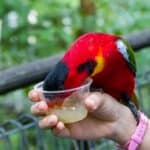
Parrots are omnivorous, eating certain insect species when foraging for food. Animal proteins are essential for parrots’ feathers, beaks, claws, eggs, muscle development, and body tissue repair.
Parrots can eat most feeder insects, including mealworms, fly larvae, waxworms, and caterpillars. Also, they can safely eat feeder roaches, crickets, grasshoppers, beetles, and mosquitoes.
Dead or frozen crickets and grasshoppers are recommended because live insects can escape due to their prolific jumping ability. Many species can jump up to 3 feet high, making containment difficult.
Types of Insects Parrots Eat
Parrots can eat most insects, including those commonly eaten by other birds. Don’t source insects from the wild because they could be poisoned or carry harmful pathogens.
Here are some insects you can safely feed to pet parrots:
Roaches

Wild birds rarely consume cockroaches, but it sometimes happens.
Roaches are found worldwide in most environments, including the native habitats of parrots.
The most common roach species used as feeder insects is the Dubia cockroach (Blaptica dubia). Aside from their nutritional value, they can’t fly and don’t bite.
Dubia cockroaches contain more calcium than most feeder insects. Parrots need calcium for their bones, claws, eggshells, and biochemical reactions. This mineral is vital for egg-laying females.
An arthropod’s protective exoskeleton is made of chitin, but ingestion can cause digestive discomfort. Just 3.5% of Dubia roaches’ body weight is chitin, while locusts are 20% chitin.
| Medium-sized Dubia Roach | Nutrition Information |
| Protein | 19.6% |
| Fat | 6.7% |
| Fiber | 2.9% |
| Water | 70.8% |
| Calcium | 700 mg/kg |
| Phosphorus | 2600 mg/kg |
If you want to give roaches to parrots, buy feeder cockroaches from a pet store. These are raised and kept in sanitary conditions, which means they won’t have been poisoned or carry diseases.
Mealworms

Mealworms (Tenebrio molitor) are the larvae of the mealworm beetle (a darkling beetle).
Mealworms are an excellent source of B vitamins, but other bugs contain more vitamin B12. Mealworms contain minerals like zinc, copper, iron, magnesium, and manganese.
Fiber reduces cholesterol levels and regulates blood glucose. The fiber in mealworms also aids digestive transit, minimizing the risk of constipation.
Unlike other feeder insect species, mealworms don’t have sharp body parts that can harm parrots. Mealworms have mandibles, but they don’t bite.
Mealworms are among the best insects for parrots because they’re nutritious and safe. However, mealworms are low in Tryptophan and Methionine.
| Live Mealworm | Nutrition Information |
| Protein | 20% |
| Fat | 13% |
| Fiber | 2% |
| Moisture | 62% |
Crickets
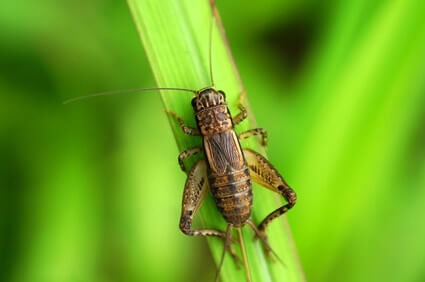
Crickets are members of the family Gryllidae. While their camouflage offers essential protection, wild birds often prey on them.
When feeding a parrot, live crickets can hop out of cages and enter other parts of the home.
You can buy frozen or dead crickets from pet stores if you don’t want to keep live crickets.
Crickets are a good source of vitamin B12, calcium, and iron. Vitamin B12 is essential for brain and central nervous system function, while iron is needed for healthy red blood cells.
| Crickets (100 grams) | Nutrition Information |
| Calories | 121kcal |
| Protein | 13g |
| Fat | 5.5g |
Grasshoppers
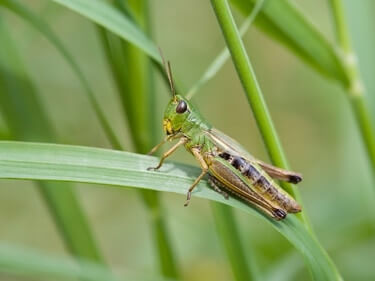
Grasshoppers aren’t as common as other feeder insects and can be challenging to source.
Nonetheless, they’re safe to feed parrots, and wild birds often feed on them in their natural habitats.
Grasshoppers contain more protein than crickets but only feed parrots dead or frozen grasshoppers.
| Grasshoppers (100g) | Nutrition Information |
| Protein | 20.6g |
| Fat | 6.1g |
| Carbohydrates | 3.9g |
Flies

Many animals, including frogs and spiders, eat flies.
Adult flies are uncommon feeder insects, but their larvae are used. Known as maggots, they’re available at most pet stores.
A popular type is the black soldier fly larvae (BSFL) because they’re an excellent source of protein and fiber.
| Black Soldier Fly Larvae | Nutrition Information |
| Protein | 41.1% |
| Fiber | 9.4% |
| Fat | 35.5% |
| Energy | 6170kcal/kg |
| Calcium | 33g/kg |
| Phosphorus | 7.2g/kg |
| Magnesium | 3.2g/kg |
| Potassium | 7.6g/kg |
| Sodium | 0.99g/kg |
| Manganese | 203mg/kg |
| Zinc | 101mg/kg |
| Copper | 12mg/kg |
| Iron | 409mg/kg |
The flies around the home aren’t the same as those sold in pet stores. Wild flies carry bacteria and harbor disease-causing pathogens because they feed off decaying food and animal feces.
If you find flies or their larvae around your home, don’t feed them to parrots.
Ants
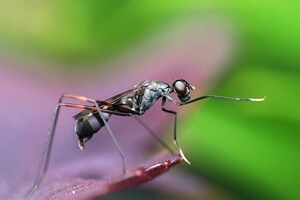
Parrots can eat some ant species. Black ants are a good source of protein, healthy fats, iron, zinc, magnesium, and potassium.
If food debris is in a cage, it’s likely to attract ants, which can parrots’ eggs and chicks.
According to Chemocology, Southern fire ants bite and release venom that causes a burning sensation.
Wood ants also release formic acid to deter predatory behavior. Birds are unlikely to enjoy eating ants because they taste sour.
| Black Ants | Nutrition Info |
| Protein | 39.79% to 44.64% |
| Fat | 42.07% to 49.77% |
Beetles

Some gardeners attract parrots to keep harmful beetle species away from their flowerbeds.
A parrot can safely eat certain beetles because they contain nutrients that improve their health and are often higher in water content, keeping the parrot hydrated.
That’s true of the common mealworm beetle, which is the adult form of the feeder insect, the mealworm.
| Mealworm Beetle | Nutrition Information |
| Protein | 26% |
| Fat | 7% |
| Moisture | 61% |
Caterpillars

Parrots can eat caterpillars if they’re not a poisonous species.
Avoid spined, hairy, and brightly colored caterpillars. Only feed caterpillars you’re sure aren’t poisonous.
You can buy caterpillars as feeder insects at pet stores, but they’re less commonly available.
The most common caterpillar for parrots is the silkworm pupae, the caterpillar of the silkworm moth.
| Silkworm pupae, 100 grams | Nutrition Information |
| Energy | 230 kcal |
| Moisture | 57.5 g |
| Protein | 21.5 g |
| Fat | 13 g |
| Carbohydrates | 6.7 g |
Waxworms

Waxworms (Galleria mellonella larvae) are the larvae of the wax moth. They’re fed to reptiles, birds, and fish.
Underweight parrots may benefit from eating wax worms due to their higher-than-average fat content.
They’re ideal for sick and malnourished pet birds. Unfortunately, waxworms are low in calcium and vitamin D.
| Wax Worms | Nutrition Information |
| Moisture | 61.73% |
| Fat | 22.19% |
| Protein | 15.50% |
| Fiber | 7.69% |
| Calcium | 283ppm |
| Phosphorus | 2161ppm |
Mosquitos
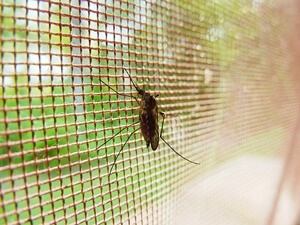
Parrots can eat mosquitos, but a mosquito contains just 0.01 calories based on weight.
In urban areas, birds can reduce mosquito populations. However, mosquitoes can reproduce in stagnant water sources and have disease-carrying pathogens.
Even mosquito larvae carry diseases. According to Vector-Borne and Zoonotic Diseases, the Swedish mosquito larvae carry a strain of the Sindbis virus.
Parrots eat insects. As long as you ensure they’re raised as feeder insects and are appropriately sourced, bugs can add vitamins and minerals to a parrot’s diet.