The loud noises of thunder and sudden flashes of lightning can be terrifying for pet parrots. When a storm arrives, the change in environmental conditions can startle and scare them.
Some parrots fear loud thunderclaps, leading to squawks, stereotypies, appetite loss, and stress. Others grow excited because thunderstorms signify abundant food and the start of the breeding season.
When thunderstorms occur, scared parrots must be kept comfortable so they don’t panic and harm themselves or experience long-term psychological damage.
How Storms Affect Parrots
Parrots know when storms and bad weather are coming. The Journal of Experimental Biology explains how birds alter their behavior based on ambient pressure changes.
They can detect barometric pressure declines before a storm (thunder, lightning, and heavy rain) arrives. Consequently, parrots can detect storms, preventing them from growing fearful.
Storm detection can have the opposite effect, as parrots will ready themselves for danger. Some parrots may show signs of stress before the storm arrives.
Thunder
Parrots sensitive to noise will dislike loud thunderclaps. More confident parrots with untroubled pasts (no owner abuse or past trauma) are less likely to be startled by the experience.
Many wild parrots live in rainforests, where storms are relatively common. They’re accustomed to the sound of thunder and are unphased by the sudden change in weather.
During the monsoon season in Australia, rainy, stormy weather signifies that food will soon be available. Warm, wet conditions provide the perfect ecosystem for plant growth.
Plants also support insect life, providing food for parrots that eat insects.
Consequently, thunder can be a positive thing for parrots because the weather it accompanies provides parrots with the sustenance needed to survive and grow the species.
Thunder signifies that breeding season will soon commence. In the Amazon rainforest, the rainy season is from February to early March.
During this period, parrots experience hormone surges, preparing their bodies to produce and lay eggs. Parrots react to thunder by vocalizing because they’re excited about the breeding season.

Lightning
Some parrots cope well with lightning and may not even notice the sky lighting up. Others will be confused about what lightning means and become unsettled.
Wild parrots understand that lightning means thunder, wind, and rain. To avoid being too elevated, where the weather can whip around them, they’ll shelter or enter tree hollows where they nest.
In dense rainforests and woodlands, lightning causes fires, which can destroy large sections of the forest. Therefore, many parrots are on high alert when lightning strikes should they need to flee.
How To Tell If A Parrot Is Scared of Thunder
Parrots scared of thunder may show symptoms before and after the storm:
Noises And Vocalizations
Some parrots will squawk or scream. If a parrot is usually quiet, excessive vocalization signifies a problem. Similarly, if you have a noisy parrot that’s gone silent, it’s upset by the loud thunderclaps.
Frantic Behavior
When scared by a storm’s sudden noises and flashes, parrots instinctively flap their wings frantically and seek to escape their cage, possibly harming themselves.
Avoids Handling
Storm-affected parrots may avoid handling and interaction. The parrot’s behavior will be temporarily changed as an act of defensiveness and self-preservation.
Puffed Up Feathers
Parrots fluff their feathers when scared to make themselves look larger and more threatening. When confronted, parrots usually do this to appear bigger, but it’s also a natural reaction to fear.
When parrots are stressed by thunder, they may puff up their feathers. This can be a fear-based reaction or a response to the storm’s introduction of falling temperatures.
Repetitive Behaviors
Fearful parrots may perform abnormal repetitive behaviors, called stereotypies. If you see a parrot pacing, rocking, spinning, or head bobbing, it’s adversely affected by the storm.
Feather-destructive Behavior (FDB)
Feather picking only affects captive parrots, not wild birds.
Parrots pluck feathers and dig into the skin with their beaks. Very stressed parrots may harm their muscle and bones, causing lasting damage to the follicles.
Once self-mutilation begins, stopping it after the thunderstorm ends isn’t easy.
Appetite Loss
Scared parrots may refuse to eat because they can’t focus on anything other than their fear. Usually, a parrot regains its appetite shortly after the thunderstorm has concluded.
Stress Bars
Stress bars are small lines that run horizontally across the feather shaft. If a parrot is in the process of molting, which usually happens in spring, the development of feathers can be hindered.
When a parrot is stressed, essential nutrients are drawn from new feathers to sustain its organs. Consequently, the feather structure, notably the barbs, is compromised.
Once the feather has formed, the damage won’t be reversed until the next molt. Consequently, the only way to avoid stress bars in parrots is to avoid the triggers.

How To Keep Parrots Calm During A Thunderstorm
The most effective ways to calm a parrot during a storm include:
Hiding Spaces
If the thunderstorm is accompanied by lightning, keep the cage away from the window where it can’t see lightning flashes. If you have them, blackout curtains keep the room dark.
If you don’t have blackout curtains, move the cage to a room with small windows to minimize exposure. Alternatively, place a blanket over part of the parrot’s cage.
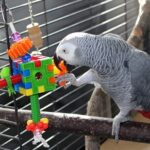
Provide toys to occupy the parrot, checking to see if it’s feeling alright.
Play Music
When thunderstorms are raging, play calming music for the parrot to distract it from what’s happening and drown out the unwanted noise. Also, white noise machines provide natural background sounds.
Stay Near The Parrot
Parrots that prefer human company will appreciate your presence when a thunderstorm arrives. During the storm, remain in the room and engage with each other so it stays calm.
If the parrot realizes you’re not afraid, it should feel less scared. Conversely, if you show fear, the parrot will sense this, leading to heightened anxiety.
Read a book to the parrot, or turn on the TV and watch it together to take its mind off things.
Calming Supplement
Dried chamomile or chamomile tea is believed to soothe stressed parrots. It may even help parrots sleep and prevent them from feather picking or other negative behaviors.
If a parrot displays destructive behaviors brought on by stress, offer it some warm chamomile tea.
While wild parrots know what thunderstorms mean, pet parrots may be unfamiliar with the loud claps of thunder. Once the storm has concluded, most parrots’ behavior normalizes.