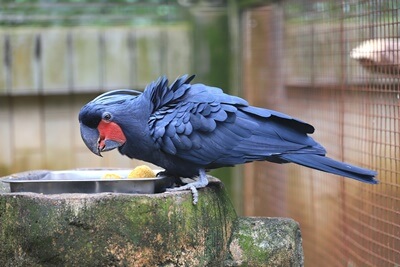
The black palm cockatoo (Probosciger aterrimus) is the largest cockatoo species.
They go by many names, including the Goliath cockatoo, the great black cockatoo, Van Oort’s palm cockatoo, and the black macaw.
Their personality doesn’t lend itself to being a family pet. Unlike most species in the cockatoo family (Cacatuidae), they’re not overtly affectionate birds.
A black palm cockatoo can become a skilled talker if you dedicate time to its training. Their voice is clear and distinct, but they’re loud birds.
The average life expectancy for a black palm cockatoo in the wild is 40 – 60 years. With the appropriate care, diet, and lifestyle, they can live for as long as 90 years in captivity.
If you want a black palm cockatoo as a pet, never buy a wild bird captured and imported to the United States. Aside from its questionable legal status, once-wild birds are near-impossible to tame.
The price of a black palm from a reputable dealer usually exceeds $15,000.
Suitability of Black Palm Cockatoos As Pets
The black palm’s aesthetic splendor and comparative rarity make them desirable pets.
The main issue is that black palm cockatoos are large birds that are hard to tame. Life in captivity doesn’t come naturally to this species, so they often become unruly and destructive.
With dedicated training and owner engagement, a black palm cockatoo may eventually settle down.
Biting is an ever-present risk with an untamed black palm, as the bite force of a large bird is significant. Consequently, it’s an unsuitable pet bird for families with energetic young children.
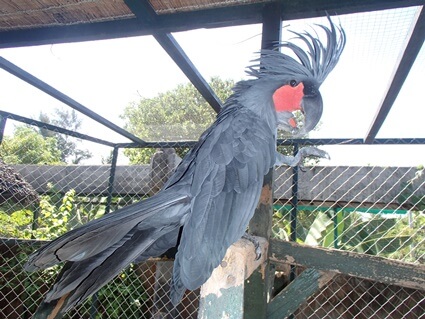
Appearance
The striking appearance of the black palm is a significant part of its appeal. Due to their majestic beauty, they are often on display at specialist bird shows and events.
The physical attributes of the black palm cockatoo include:
- Black or dark, smoky gray feathers.
- A long, erect, recumbent crest atop the head.
- A bright red patch of bare skin on the cheeks.
- A large black or dark gray beak. The two upper and lower beaks don’t meet.
- They can reach 24 inches long and weigh 2 to 3 lbs.
Black palm cockatoos are monomorphic, meaning that males and females are identical. To determine the sex of a black palm, a DNA test is required.
Personality
While a tamed black palm can form a bond with an owner, its temperament can be standoffish.
If a black palm cockatoo doesn’t get enough out-of-cage time or attention, its moods can be complex. Living with a frustrated black palm means it’ll be belligerent and destructive.
Keep a black palm cockatoo calm and responsive to training by engaging with it regularly, providing a peaceful living environment, and establishing a consistent schedule.
Intelligence And Trainability
Black palms are among the cleverest parrots. In the wild, they’re often observed using “tools” to locate and access food. This behavior is more commonly associated with corvids.
Black palm cockatoos can learn tricks and immensely enjoy the training process. If you’re patient and consistent, you can train a black palm out of behaviors like excessive biting or screaming.
Attention Requirements
All parrots require attention, especially if they live alone. The black palm is an intelligent parrot that needs near-constant stimulation from its environment and an attentive owner.
Never leave a black palm alone for longer than 8 hours. This will lead to destructive behaviors and aggression borne of frustration. Consider asking a trusted friend to visit while you’re away.
Noise And Vocalizations
Living with a black palm cockatoo will never be quiet. They’re inappropriate for life in an apartment or shared accommodation, where the persistent noise will frustrate your neighbors.
Sounds
Black palms greet the sun’s rising with squawks, screeches, whistles, and squeaks.
A behavior considered unique to the black palm cockatoo is using tools to create music. Science Advances explains how they enjoy creating rhythmic drumbeats on tree trunks with sticks in the wild.
Expert opinion is divided on why they do so. It’s theorized that it makes sounds to mark territory to warn off encroachers or check if a trunk is hollow and suitable for nesting.
Black palms can learn human words. However, they’ll make bird sounds if not trained.
Cage And Its Setup
The black palm is a large parrot. The minimum size of a black palm cockatoo’s cage should be 1200″ x 600″ x 600.” The recommended bar spacing is 1″ to 1.5″ to prevent trapped body parts.
Encourage in-cage activity by providing climbing frames, swings, and ladders.
The cage needs other environmental enrichment, including toys it can chew and destroy. It’ll also need intellectual stimulation like puzzles. Regularly rotate the toys for further engagement.
Line the cage with newspaper, paper towels, or a cage liner to make cleaning easier.
Diet
Black palms must be fed twice daily. They should be offered food in the morning upon waking and again in the evening, around an hour before sleep.
In the wild, they eat palm fruit, Java almonds from the kanari tree, eucalyptus tree bark, seeds, insects, and larvae. In captivity, feed them formulated pellets, fruits, vegetables, nuts, and seeds.
You can offer nutritious snacks during the day or as training and behavior rewards.
Feather Care
Feathers are made of beta-keratin, so ensure your parrot gets enough protein-rich foods.
Black palm cockatoos usually shed their old and worn feathers at least once a year. Parrots are more irritable now because molting is uncomfortable, so avoid excess petting.
Black palm cockatoos shed dust from their wings. This powder is a fine layer of keratin that protects the feathers from excessive wear and tear. It gives the feathers a temporary gray appearance.
As a parrot lives in captivity, there will be limited opportunities for powder down to blow away.
A black palm is best avoided if you are allergic to parrot dust. Clinical and Experimental Allergy warns that avian dander can cause rhinoconjunctivitis.
You can dander problems with regular bathing and misting of the feathers.
Living with Other Birds
As black palms live in small flocks, they enjoy the company of birds of the same species. Unfortunately, housing a black palm cockatoo with other species isn’t recommended.
If you have the space and resources, a pair of black palms may be able to live together. For this to happen, they have to go through a careful introduction process.
Exercise
It must spend time in a parrot-safe room to explore and engage with you for 3+ hours. Out-of-cage time should be supervised as black palms may chew electrical cables.

Average Price
Black palm cockatoos reach sexual maturity at 7 and breed sporadically after this age. Most breed once every 2 years, and a clutch will likely consist of just 1 egg.
The black palm is challenging to breed and complex to import, so they’re expensive. You’re unlikely to find a young, healthy black palm cockatoo for sale at less than $15,000 to $20,000.
A large cage that’s sturdy enough to accommodate them will likely cost over $500. The cost of food, bowls, toys, cage liners, and vet bills must also be assessed.
Sellers
To buy a black palm, locate a licensed breeder. They must show you a CITES permit to prove the bird was hatched in the U.S. or legally imported, not captured from the wild.
Alternatively, explore bird shelters to see if black palm cockatoos are available for adoption. Learn about the parrot, including its health and the reasons for rehoming. Does it have behavioral problems?
The size and temperament of a black palm cockatoo make them challenging pets. Unless you’re an experienced owner, these majestic birds are better admired at a zoo or aviary.