

Parrots have higher body temperatures than humans, so their feet feel abnormally warm to us.
Also, parrots use body parts uncovered by feathers to regulate their body heat on hot days and after activity. This excess warmth is released through the skin because parrots can’t sweat.
The more you handle your parrot, the more accustomed you’ll grow to its body temperature. This can alert you when the parrot needs a lower temperature, shade from the sun, or bathing.
Overly hot feet can be a warning sign of kidney problems or renal failure. Consequently, you must consult a veterinarian if a parrot’s feet remain too hot for more than 24 hours.
Why My Parrot’s Feet Are Hot
Parrots have warm feet, which is normal and rarely a concern. Here’s why:
Higher Body Temperature
You’ll notice the skin’s hot if you touch the bare skin underneath a parrot’s feathers. That’s the case because parrots produce more body heat than humans.
The average adult human’s body temperature is 97 degrees Fahrenheit, while the average parrot is around 107 degrees Fahrenheit.
This is the case for small, medium, and large parrots because they have a faster metabolism. Due to the surface volume, the environment doesn’t take long to cool a small object.
According to the Journal of Experimental Biology, for parrots to keep themselves warm, their metabolism is elevated, and their body temperature runs higher.
This is true for many smaller animals, including rabbits, mice, and cats. In contrast, larger animals cool down slowly and often have a slower metabolic rate.
Body Temperature Regulation
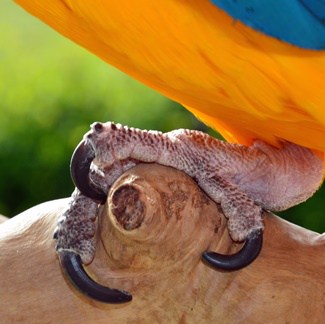
It’s normal for parrots’ feet to be warmer than elsewhere because this is where they release warmth.
Parrots’ feathers serve as insulators that retain heat, helping them maintain their body warmth. This is an essential part of avian thermoregulation.
However, there needs to be a way for heat to leave the body, as parrots risk overheating.
Humans sweat to remove extra body heat, and dogs pant or drool. Parrots don’t produce saliva, and they lack sweat glands. Instead, parrots cool down by rapidly vibrating the:
- Upper throat.
- Floor of the mouth.
This is known as gular flutter, which many non-passerine birds do to cool off.
However, the energy it would take to vibrate the upper throat constantly is too great. So, parrots use their feet to remove excess heat, limiting how much energy they expend.
Parrots’ feet are uninsulated, allowing them to cool down faster than the rest of the body. Therefore, when hot, parrots increase blood circulation to their feet.
Warm Climate
Parrots come from hot and humid climates. According to the Journal of Thermal Biology, parrots have an efficient thermal regulation system to thrive in these conditions.
A pet parrot might have more difficulty regulating its body temperature than its wild counterparts. This will depend on the following factors:
- Locality (country, state, etc.)
- Home temperature settings.
- Seasonality (summer vs. winter).
Parrots can cool off in their natural environment with freshwater streams and rivers. However, a pet parrot may not have access to water to stand or bathe.
During the summer, a parrot might experience difficulty cooling off when temperatures are too high.
Vigorous Exercise
After intense exercise, a parrot’s heart will beat faster, and its metabolism will work harder. This increase in energy production means its body temperature will rise significantly.
Heat Transfer
Parrots use their feet to exchange temperatures with their environment.
If a parrot perches on something cold, it’ll lose body heat. The speed at which this happens depends on how cold the object is relative to the temperature.
Similarly, if a parrot perches on something warm, its feet will heat up. This is often the case when handling a parrot, as your body heat is transferred to its feet.
Kidney Problems
Take note if a parrot’s feet are hotter than usual for 24 hours straight. The kidneys remove waste and toxins from the body, so very hot feet signify renal problems.
If a parrot’s kidneys aren’t working well, this destabilizes its bodily functions and degenerates the organs. Unable to detoxify the body, the parrot develops a fever, which makes its feet overly hot.
Weight Gain And Obesity
An obese parrot’s body temperature will be higher because subcutaneous fat traps heat, meaning that overweight parrots are more vulnerable to heat stress than other birds.
Stressful Situations
When a parrot is stressed, its heart rate and body temperature rise. As soon as the parrot calms down, its blood circulation normalizes, and the heat is expelled from the feet.
Parrot Feet Heat Myths
There are myths about warm parrot feet that can lead owners to take the wrong measures after noticing the bird’s body temperature rising, including:
Poor Diet
Some owners believe that a malnourished parrot will have hot feet, which stems from the idea that poorly fed parrots can’t regulate their temperatures well.
An underfed parrot will have colder feet than usual because its body must conserve energy. Malnourished parrots remain still or have their feet tucked into their bodies to prevent heat loss.
Fear
If a parrot thinks its life is in danger, its feet won’t warm up because the body sends blood flow from the feet to the wings, allowing its muscles to loosen up. That way, it can quickly fly away from danger.

What to Do When A Parrot’s Feet Are Warm
Here’s how to cool a parrot’s feet:
Water
Place a shallow bowl or plate of water in the cage because this will provide the opportunity to remove excess heat. A parrot can stand in the water, splash around, and rehydrate.
Stay Indoors
If a parrot lives in an aviary, bring it inside on the hottest days of summer.
As a minimum, provide some shade over the cage. Planting trees next to the aviary and letting them grow over it is recommended. A blanket or wooden roof can also be beneficial.
Diet
Avoid overfeeding parrots, as kidney problems often occur due to an improper diet. Also, avoid seed-only diets because they have high amounts of fat and lack nutrients.
A formulated diet is recommended because it contains the nutrients needed to thrive.
Temperature
Change the temperature in your home by turning on the AC or opening some windows slightly (when the cage door is closed). Switching to no-heat light bulbs can also reduce the temperature.
Time
Contact a vet if the feet remain overly hot for more than 24 hours to rule out kidney problems.


