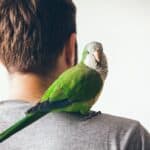
Cockatoos are known for producing screeches. They make these ear-splitting vocalizations when scared, over-excited, in pain, sick, feeling ignored, or looking for mates.
There are 21 different cockatoo species in the world. The loudest cockatoo is the Moluccan, with an average decibel range of 120-135.
Citron-crested cockatoos and cockatiels are the quietest birds, with Galah cockatoos not far behind.
Cockatoos are the fourth loudest parrot species, surpassed only by nanday conures, mealy Amazon parrots, and sun conures. To put these decibel figures into context, consider these readings:
- Human laughter: 65 decibels.
- Average talking voice: 60 decibels.
- Thunderclap: 120 decibels.
- Air raid siren: 135 decibels.
- Jet engine or fireworks: 155 decibels.
Cockatoos aren’t well-suited to neighborhoods that are sensitive to noise disturbance. You can train parrots to vocalize less. Unfortunately, you can’t stop them from vocalizing entirely.
Noise from Cockatoos At Night
While cockatoos sleep at night when it’s dark, they can stir due to sudden disturbances. Birds enter unihemispheric sleep, where one brain hemisphere remains awake.
As Nature and Science of Sleep explain, unihemispheric sleep enables birds to check for threats.
Some cockatiels are prone to night frights, which happen when they grow scared of something. Parrots never evolved to have good night vision and can’t see what’s happening.
Cockatoos will start screaming and thrashing about frantically. They can hurt themselves, so do your best to make them feel at ease when the lights go out.
Cockatoos can be rationally or irrationally scared by these disturbances:
- Car headlights.
- Buzzing insects.
- Unfamiliar sounds.
- Unexplained shadows.
- Pets that stalk the cage.
Startled Cockatoos scream and won’t quieten until they feel calm. Placing a cover over the cage may settle them down after dark, but it could exacerbate the situation.

Different Noises Cockatoos Make
Cockatoos make various sounds, but some species learn to mimic human words if trained. A wild cockatoo will never learn to speak because it’s never encountered humans.
Each cockatoo vocalizes differently based on the sounds within their environment. For example, cockatoos in noisy homes are likely to be even louder.
Cockatoos make the following vocalizations:
Squawk And Screech
Cockatoos produce loud screeches. While it can be hard to bear for those nearby, it’s an essential part of their communication. Umbrellas, Goffins, and Moluccan cockatoos are the most likely to scream.
If you have several cockatoos, they’ll likely set each other off, especially at dawn and dusk.
Whistling
Cockatoos like making whistling sounds. If you whistle regularly, a cockatoo will likely do the same.
If you want to teach a cockatoo to talk, do so before it starts whistling because they find it easier and more fun. This means the cockatoo may lose the desire to learn English words.
Whistling is the sound of a happy cockatoo. It’s also relaxed and recognizes that danger isn’t nearby. It may be bored with life. If so, entertain it with one-on-one time and fun games.
Talking
It can be hard to train cockatoos to speak, but those who talk have a soft voice. Some cockatoo species are better talkers than others, like the sulphur-crested cockatoo.
Singing
If a cockatoo whistles and talks, it’s likely to sing. Similarly, if you play a lot of music or frequently have the TV on, it may copy the songs and sounds it hears.
According to Scientific American, cockatoos can sing lower notes than smaller birds.
Hiss
Cockatoos hiss, but it’s a noise made when they feel threatened or afraid. A cockatoo will likely lunge or bite you if you don’t heed its warning to back away.
Call
Cockatoos make calling sounds to find a bonded partner or locate flockmates. Pet cockatoos learn calls from their owners in captivity and call out to them when they’re unsure where they are.
Calling can signify anxiety and loneliness. If you hear a cockatoo calling for you, reveal yourself to put it at ease and give it some attention. Some parrots develop separation anxiety disorders.
Why Cockatoos Scream
Screaming is an unpleasant sound that all cockatoos make. Unfortunately, it’s not always easy to determine why they scream, but it’s likely for the following reasons:
Pain or Illness
Parrots spend most of their lives standing, so a foot or leg injury can cause discomfort. Check for other signs of pain, like bleeding or the inability to perch due to bumblefoot (pododermatitis).
If a cockatoo is unwell, you may find it refuses to eat, has dull feathers, or loses weight.
Fear
Worry causes adverse reactions, but screaming is common. It’s an instinctual sound because cockatoos must warn their flockmates of impending danger.
Ignored
Cockatoos are intelligent birds. If they learn that screaming gets them attention, they’ll vocalize loudly when ignored, which can become a behavioral problem.
Screaming is also a sign of anxiety due to being ignored. Cockatoos that enjoy being around their owners like to know where they are and may panic if they can’t locate them.
If a cockatoo often screams because it feels ignored, put its cage in a communal location.
Unhappiness
Cockatoos can’t be happy 100% of the time and will express their mood by screaming. Poor husbandry, predatory pets, or an unsuitable diet can exacerbate the problem.
Over-tiredness is another factor. While it would make more sense for tired cockatoos to quieten down, parrots needing sleep may become vocal and destructive.

Mating Behavior
Cockatoos screech when looking for a mate. This is normal, but it can be persistent.
Similarly, parrots become hormonal during the breeding season. While short-lived, these hormonal surges can be triggered by petting, daylight, and over-abundant food.
Over-Excitement
If a cockatoo becomes overexcited, it vocalizes excessively. Pandering to the cockatoo increases the likelihood of this behavior becoming normal.
When cockatoos become over-excited, they become animated.
While this might not sound like a problem, there’s a fine line between excitement and misbehavior. Your parrot will soon become poorly behaved.
When a cockatoo starts squawking and becomes excitable, it needs time to calm down.
Cockatoos Are Louder Than Macaws
Cockatoos have a louder vocal range than macaws. We’ve mentioned how loud cockatoos can get, but the noisiest macaws can reach around 105 decibels.
To put this into context, 105 decibels is equivalent to a helicopter that’s close by or a large drum. While macaws aren’t quite as loud as cockatoos, they still produce significant noise.